Transcript
Notice: Transcripts are machine and human generated and lightly edited for accuracy. They may contain errors.
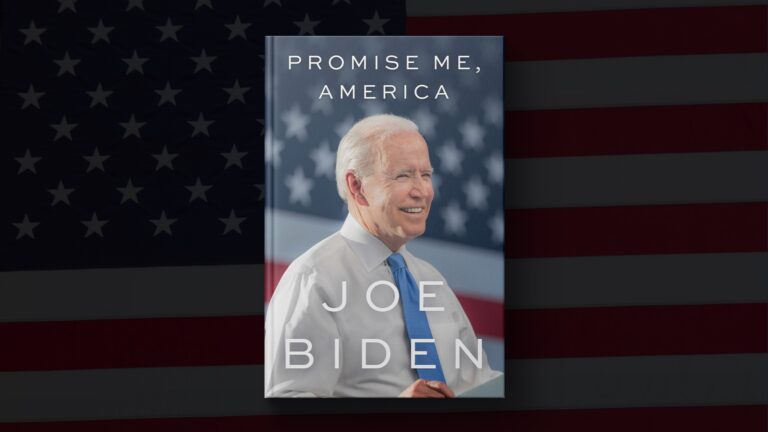
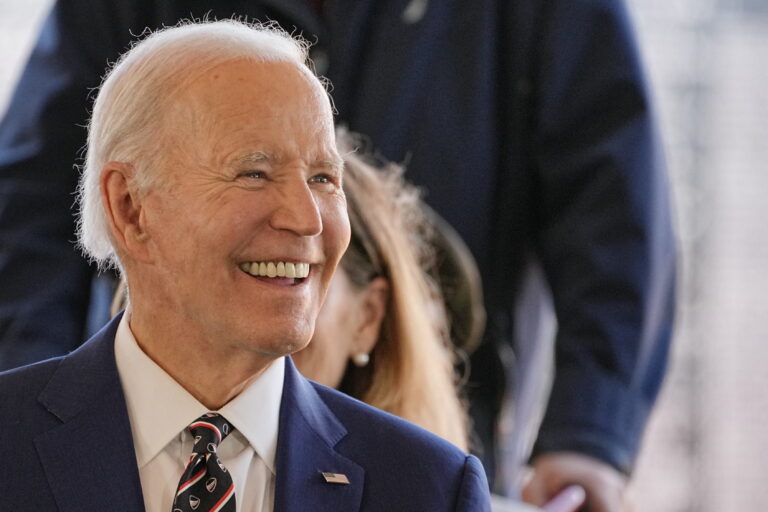
Amna Nawaz: Almost two years after leaving office, President Joe Biden has penned a memoir about his time in the White House. It’s called “Promise Me, America.” And it’s out today.
But the former president isn’t doing the typical run of media interviews.
Earlier today, I spoke with his former counselor, Steve Ricchetti, and began by asking him why he was here on Biden’s behalf.
Steve Richetti: Well, he’s had to limit what he’s doing in terms of a book tour and things like that, because, I think as you know and has been widely reported, he has a stage 4 cancer diagnosis. He got that last May.
And so he’s working his way through the part of this where he still gets pretty heavy doses of medication to help manage the cancer. It’s — it moved into his bones, so there’s some pain and discomfort with it, and frankly, even affects his energy level.
So he’s not going out in the way that I think he would really like to with a kind of traditional book tour, and so a number of us who worked closely with him are going to try to share some of the load and do it.
Amna Nawaz: You have known him for so long. You know him so well. He writes in the book, too, about the span of his career.
He says: “I was elected to the Senate as a 29-year-old kid. I left the presidency as an 82-year-old man. I have seen the long sweep of history.”
You say he wants the book to speak for itself. So what is it he hopes to accomplish by putting it out at this time?
Steve Ricchetti: He wanted to do this close enough to his presidency, his time in office, that he could speak with — and remember the events and talk through what he experienced because it was still fresh in his mind.
He waited until after the midterms because I think he didn’t want the book to be the subject of what the political dialogue was for the midterm elections. He wanted this to be and, as it was, a referendum in many ways on President Trump’s first two years in office. So it was timed to follow the midterms, but to be close to his presidency enough that he could talk about it in the ways that he had, very completely and thoroughly.
Amna Nawaz: I mean, it is very thorough. It’s incredibly comprehensive. Reading through it, I was reminded of all these stories that we covered, the chaos he stepped into in the pandemic, after the January 6 insurrection, all the legislative efforts I know you were deeply involved in, from the American Rescue Plan to the Infrastructure Act, the CHIPS Act, rallying NATO after the Russian invasion of Ukraine.
All of these are detailed in the book. And yet, as I’m sure you have seen, it is his decision to run again that’s getting a lot of attention as people are making their way through the book. He writes about that in the book. He says: “I believe I was the best person to do it, the only person who’d ever beaten Donald Trump. I felt I was the best person to do it again.”
I’m sure you have seen, as folks read this, one journalist in particular called his reflection on this “pugnacious, unrepentant, and unreflective.”
What do you make of that?
Steve Ricchetti: I just don’t think that’s a fair criticism of the book, for the reasons that you just said.
I do think it is now hard to remember. Maybe there’s even some kind of psychological effect from what we went through during COVID, but that we forget that he really inherited as severe a set of challenges as any president in our lifetime.
There really were three crises in our country. There was an international pandemic. Hundreds of thousands of people had died of COVID on January — by January 20 of 2021. We were in an — the economy was flat on its back. We were in an economic crisis. And, again, what you just pointed out that people have forgotten, it was two weeks after the January 6 attack on the Capitol.
And, really, the heart of our…
(CROSSTALK)
Amna Nawaz: … he was sworn into office.
Steve Ricchetti: Yes, and the heart of our democracy was on the line, the institution of the presidency, respect for other branches of government.
There was so much at stake in that first year of his presidency just to restore a sense of confidence and respect for the presidency itself and to reaffirm our reputation and role in the world.
Amna Nawaz: And yet, since then, as you know, the party is still sort of reckoning with that decision of how his candidacy for reelection ended, what happened in the wake of that…
Steve Ricchetti: Yes.
Amna Nawaz: … President Trump’s reelection.
And I have to ask, because I didn’t see it in the book, but, in hindsight, as you know him and you speak to him, has there been any reflection on maybe I should not have run again, maybe this should not have taken a disastrous debate or an intraparty feud? Has that ever been part of the conversation? Because it’s not in the book.
Steve Ricchetti: It’s not because, in April of 2023, when he made the decision to run again, it was a pretty straightforward equation in his mind.
We believed we were making progress in the country. There was no question that we had, the country had endured real difficulty, real challenge. His leadership through that period of time, in his mind and in my mind and in the mind of those around him, we just believed we were making progress.
We knew there were still challenges ahead and work to be done, certainly more work to be done with respect to the economy and prices. And he believed he was healthy and more prepared than anyone to take the next step and to lead the country for four more years.
Amna Nawaz: When you talk about the memoir and the legacy that it starts to create, even today, he goes to Dublin to support his son as he’s getting an award, and he’s heckled by protesters outside who opposed his support for Israel and their war in Gaza.
Where does that fit into the president’s legacy, do you think?
Steve Ricchetti: I think it’s still being debated today, and appropriately so.
I think the president, as you just have read, spent a lot of time, real attention, and at times even struggled with the decision-making that was occurring in Israel and with Prime Minister Netanyahu with respect to the direction that he and his military were taking there, and made every effort with the power and the influence of the United States to try to direct that in a somewhat different way.
Amna Nawaz: You have worked in Democratic politics for a very long time. As you and I sit here, you have just seen your party win sweeping victories across these midterm elections, flipping seats, flipping states in some cases.
What is it you want to see the Democratic Party do now with this opportunity they have?
Steve Ricchetti: I think it was a seismic election. It really was for Democrats, in particular. It was just so deep and wide in our — the fact that we won races in states that people for many years didn’t think could be competitive.
And I think maybe this is a moment to pivot in American politics, because, to a person, they said, I will work with anyone, Republican, Democrat, or even President Trump, to attack America’s problems. We have an affordability crisis. People around a kitchen table are struggling to get by. They need help, and I will work with anyone to produce results for them.
And I think that is very, very healthy in our politics, and I think we should put a premium on people who are willing to reach across the aisle or do whatever it takes to help move things along to make progress in the country, to achieve legislative results in a bipartisan way, even in the way that President Biden did in the — several of the things that you mentioned and that he discusses in great detail in his book.
Amna Nawaz: Well, as we said, his new book, “Promise Me, America,” is out now. I hope we have the chance to speak with him directly about it as well.
In the meantime, Steve Ricchetti, we thank you so much…
Steve Ricchetti: Thanks for inviting me…
Amna Nawaz: … for being here today.
Steve Ricchetti: Thank you so much.
Support Canvas
Sustain our coverage of culture, arts and literature.