Transcript
Notice: Transcripts are machine and human generated and lightly edited for accuracy. They may contain errors.
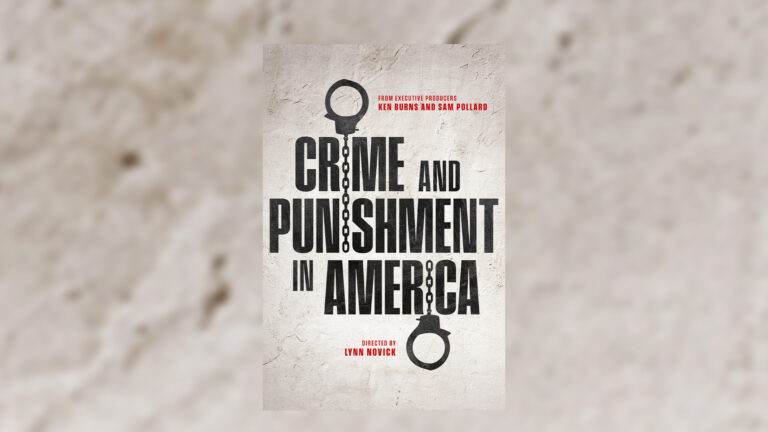
Geoff Bennett: A new PBS documentary, “Crime and Punishment in America,” that starts tonight traces the evolution of policing, prisons, and the criminal justice system across four centuries of American history, directed by acclaimed filmmaker Lynn Novick and executive-produced by Ken Burns, the four-part series examines how Americans have defined crime, determined punishment, and wrestled with fundamental questions of justice and fairness.
Thanks for being here.
Lynn Novick: Thanks so much for having me.
Geoff Bennett: So your film traces the history of crime and punishment in America, but it also speaks directly to the debates that are happening right now.
Lynn Novick: Yes.
Geoff Bennett: What does that history help us understand about the current moment?
Lynn Novick: Well, one of the things that we learned in trying to trace this history back, how did we get here, how did America become the world leading incarcerator, is that you really have to go back to colonial times and understand that we inherited a system of punishment and laws from England.
And over time we have tinkered with it, but we have really pretty much always been focused on punishment as a way to address crime. Even though we kind of know that the root cause of crime is something we should be addressing, we tend to focus really on what happens after someone commits a crime. What do we do to them to make sure this isn’t going to happen again?
And I think our approach has been proven to be deeply flawed.
Geoff Bennett: Throughout the film, we hear from people who have been incarcerated alongside people who have worked within the justice system. What do those personal accounts yield that history and archives cannot?
Lynn Novick: Yes.
That’s such a great question because I think, when we’re talking about justice, we’re talking about these abstractions, these kind of faceless institutions, statistics. And it’s really important to remember that, put all that aside, we’re talking about human beings, men, women, and children, who have been incarcerated, who have worked in these places, who have tried to make them better.
It’s all about people. So, for us, it’s always been about finding the individuals who have borne witness and who we can learn from. What does this really mean if you were convicted of a crime in 1870 and sent to a chain gang, sent to a prison? What would that have been like for you?
Geoff Bennett: You mentioned that the U.S. has the highest incarceration rate in the world.
At one point, as the film notes, the country held roughly 20 percent of the world’s incarcerated population. How did we get to that point?
Lynn Novick: Yes, I wish I had an easy answer.
And one of the things that’s really challenging about this topic is that it’s very diffuse. We have 50 states and the federal government. We have 3,000 counties. We have 18,000 plus police departments. And each of these entities kind of operates independently, and all of them contribute to the way that we do justice and what our prisons look like and how people end up there and what happens to them when they’re there.
And so what it means is that you can think about a big picture, but you have to take it in small pieces, if that makes sense. And we have made a lot of small decisions, as the law professor, legal scholar James Forman tells us in the film, and there’s no one reason that we got here.
And so to change it, it’s going to take a lot of small decisions to kind of undo the overincarceration that we have been facing. But we are out of whack with every other peer nation by orders of magnitude. And it didn’t happen overnight. It happened over about a 20-, 25-year period.
Geoff Bennett: Yes.
What surprised you the most when producing this film? Is there something that really struck you or challenged what you believe to be true about the criminal justice system?
Lynn Novick: Well, the first thing that surprised me — and a lot of things did surprise me — was that, before the American Revolution, there were no prisons or penitentiaries as we think of them today.
If you got accused of a crime, you would be put in jail until your case was settled, and then you would be taken out and you would be punished. And punished can mean executed, branded, whipped, tortured, put in the stocks or pillory, and then you would go home if you were still alive.
And so that was a pretty barbaric, horrendous, just brutal system of punishment. And around the time of the Revolution, our founding fathers, many of them believed we should do something better. We’re a new kind of government with a republic with citizens who deserve better treatment.
And so they came up with the idea that we should build a place called a penitentiary where people would go if they’d committed a crime and been found guilty to repent. And they would be there for a period of time.Then they would be returning to society reformed. That idea that incarceration was both punishment and rehabilitation was a new idea, and Americans invented it.
And I think one of the most important things we need to do is to really ask ourselves the hardest questions. How would I feel if someone I loved was harmed or killed, a horrible crime had happened to our family? What would I want to have happen to the person who did that?
And flip it around and say, how would I feel if someone I loved committed a horrible crime? What would I want to have happen to them? And if you can try to see it from every perspective, then we can get to the deeper question of, are we — do we believe in redemption for everybody?
Do we believe in second chances? Do we believe in hope? Do we believe in human dignity? Do we believe in the things that our founding fathers and our national creed tells us we believe in, equal justice? And if we do, then I think we have to really challenge ourselves to think about whether we’re doing justice, criminal justice, in the right way.
Geoff Bennett: You have screened this film for the incarcerated. What has the response been?
Lynn Novick: Yes, it’s been really — it’s been a profound experience for all of us who worked on the film to take a highlight reel into prisons and jails around the country and share the film with them.
We have a scene about correction officers. We have a scene about victims and what they experience and what they do and don’t get from the system. We have scenes about incarceration, what that’s been like over our history.
And engaging in conversations with people who are in fact confined right now has been really deep. It’s been deep. We have heard people say it’s hard to watch, it’s painful, it’s making them feel angry at a system that they feel hasn’t treated them fairly, and also a lot of regret for mistakes they have made that got them into the situation that they’re in, and also that they didn’t know this history, as I didn’t when I started working on this project.
So I think knowledge is power, and knowing where we came from and how we got here is helpful to go forward. And that’s been the same conversation we have been having with people inside our prisons and jails.
Geoff Bennett: The PBS documentary “Crime and Punishment in America.”
Lynn Novick, always good to speak with you.
Lynn Novick: Thank you so much for having me. It was a pleasure.
Geoff Bennett: “Crime and Punishment in America” premieres tonight at 8:00 p.m. Eastern/7:00 p.m. Central here on PBS. Check your local listings.
Support Canvas
Sustain our coverage of culture, arts and literature.