Transcript
Notice: Transcripts are machine and human generated and lightly edited for accuracy. They may contain errors.
Geoff Bennett: “Sinners,” directed by Ryan Coogler, made Oscars history recently when it earned a record 16 Oscar nominations.
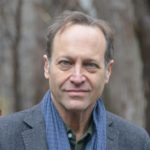
One for best supporting actor went to Delroy Lindo, a 73-year-old widely respected veteran now receiving his first nomination.
Senior arts correspondent Jeffrey Brown met Lindo recently in New York for our arts and culture series, Canvas.
Jeffrey Brown: On a dirt road in Mississippi, three men come upon a chain gang. One of them, Delta Slim, played by Delroy Lindo, exhorts the prisoners.
(Singing)
Michael B. Jordan, Actor: Hey, you knew some of them?
Delroy Lindo, Actor: All of ’em.
It’s very specific. 1932, a very particular community, Clarksdale, Mississippi, 1932. But it has, in my estimation, transcended itself and become much more universal.
Jeffrey Brown: Lindo is part of the extraordinary ensemble cast of “Sinners,” part historical drama of race in the Jim Crow South, part horror film complete with vampires, all bold filmmaking by director and writer Ryan Coogler.
In the lead, Michael B. Jordan, playing two roles. The Smokestack twins, returned to their Mississippi Delta home, determined to build a juke joint, alive with the blues and the musicians who play it, Miles Caton, Sammie Moore, Lindo’s Delta Slim.
Delroy Lindo: Blues wasn’t forced on us like that religion. Nah, son, we brought this with us from home. It’s magic, what we do. It’s sacred and big.
Jeffrey Brown: “Sinners” is such an unusual mix of things.
Delroy Lindo: It is.
Jeffrey Brown: When you first heard about it or when you first read the script, did you get it?
Delroy Lindo: Yes. When I first read it and the first — as we were working on it, for me, it always resonated in terms of it being a story about a community that is infiltrated, a vibrant community, a vibrant self-sustaining community.
What happens when that community is infiltrated? And from that standpoint, it felt very, very, very contemporary to me.
Jeffrey Brown: In what sense?
Delroy Lindo: That there are a lot of communities being infiltrated and violated,people who are considered to be less than unworthy, not worthy being picked on and bullied and violated.
Jeffrey Brown: Lindo himself started in theater. His Broadway debut came in 1982 in the apartheid era drama “Master Harold and the Boys.”
And he received a Tony nomination for his performance in August Wilson’s “Joe Turner’s Come and Gone” He’s appeared in numerous TV series and movies and is perhaps best known for his work with director Spike Lee in four films, “Malcolm X,” “Crooklyn,” “Clockers,” and 2020’s “Da 5 Bloods,” a commanding presence and emotional depth on display in that driving scene in “Sinners,” which ends with Lindo’ character describing the lynching of his friend.
Delroy Lindo: Klan got ahold to him, searched his pockets, found all that money, made up a story about him killing some white man for it and raping that white man’s wife. And they lynched him right there in the railroad station.
Jeffrey Brown: Before dissolving into a wordless, blues-inflected moan.
(Singing)
Jeffrey Brown: Was that written that way or…
Delroy Lindo: No, that happened the last few takes that we worked on.
Jeffrey Brown: Really?
Delroy Lindo: Yes. And it came out of — it was very organic. And that moment came out of everything that had preceded it.
Jeffrey Brown: So it’s in real time?
Delroy Lindo: Absolutely. It comes out as a holler. It comes out as a moment, an emission of sound, an emission of music, as a result of the fact that there are no words left.
Jeffrey Brown: There’s just pain.
Delroy Lindo: Yes, pain, but it’s the navigation of pain. It is not the moment of a victim. I’m not victimized. I’d like to believe I’m expressing this is how I deal with the pain.
Michael B. Jordan: They ain’t paying you $20 a night. I know that.
Delroy Lindo: You ain’t paying no $20 a night. You paying $20 maybe tonight.
Jeffrey Brown: Lindo says this first nomination and the outpouring of joy from others who’ve long thought he deserved more recognition make this a special moment.
His acting road has not always been an easy one.
Delroy Lindo: A sinner like me, I can’t ask for more than that.
Jeffrey Brown: You felt that, right?
Delroy Lindo: Sure. And there have been ups and downs.
Jeffrey Brown: What’s been the hardest for maintaining a career?
Delroy Lindo: Good question. The hardest for maintaining a career for me was maintaining the belief in myself and in my ability to continue working, even when the evidence said otherwise, even when there was no job.
(Laughter)
Delroy Lindo: Even when there was no job, I had to believe.
Jeffrey Brown: The world is telling you one thing, but you have to tell yourself something else.
Delroy Lindo: Exactly right. Certainly, I have been despondent. Certainly, I have been — my belief has been rocked, but I have never been completely down and out.
What I would say to any younger actor is, any person, a part of one’s strength is in having the ability to get up off the canvas, if one is down on the canvas, to get up and find a way to keep moving forward. That’s what I have done.
Jeffrey Brown: Delroy Lindo, Delta Slim, goes for his best supporting actor nomination on March 15.
For the “PBS News Hour,” I’m Jeffrey Brown in New York.
Support Canvas
Sustain our coverage of culture, arts and literature.